The Journey of a Sugarcane Stalk: From Field to Fork (and Beyond!)
- Abhishek Kathiriya
- Jul 10, 2025
- 1 min read

Updated: Jul 12, 2025

Have you ever wondered about the full life cycle of the materials that hold your food? Let's take a fascinating journey with a humble sugarcane stalk and discover how it transforms into the incredibly sustainable bagasse takeout containers we're increasingly seeing.
It all begins in the field, where sugarcane grows abundantly, primarily for sugar production. Once harvested, the stalks are transported to mills where they are crushed to extract their sweet juice. This juice is then processed into sugar. But what's left behind? That's our hero: bagasse, the dry, fibrous pulp.
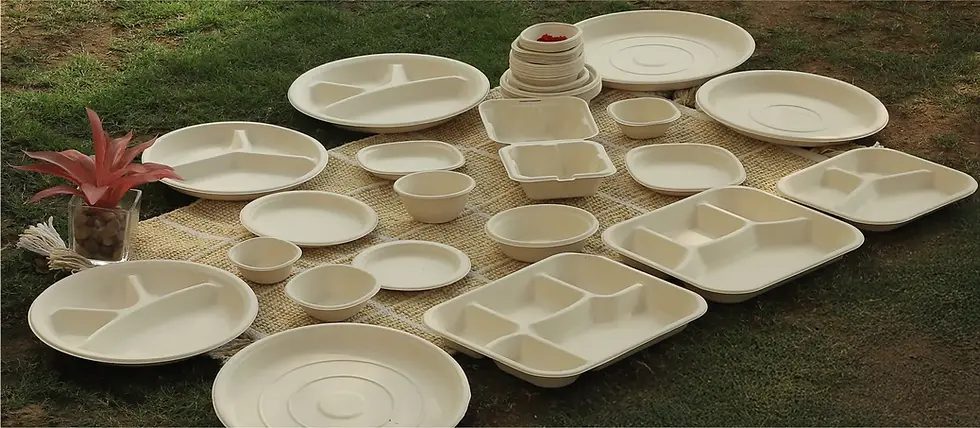
Historically, bagasse was often burned or treated as waste. However, innovators saw its potential. This leftover fiber is now collected, cleaned, and then pulped, much like wood in paper production. This pulp is then pressed into various molds under high heat and pressure, forming the sturdy, naturally colored takeout containers we know.
The most remarkable part of this journey is its end-of-life story. Unlike plastic, which might sit in a landfill for generations, bag
asse containers are designed to return to nature. They can be composted, breaking down into organic matter that enriches the soil. This complete cycle, from a rapidly renewable plant to a fully biodegradable product, showcases a truly circular economy in action. So, the next time you hold a bagasse container, remember the remarkable journey of that sugarcane stalk, making your meal (and its packaging) a little bit greener.